 New products
 Home audio
 Audio components
 Crossover components
 Test & measurement
 DIY kits
 Accessories
 SALE
 New products
 Speakers
 Amplifiers
 DAC converters
 DSP modules
 Turntables
 Streamers
 Woofers
 Tweeters
 Exciters
 Bass shakers
 Plate amplifiers
 Amplifier modules
 Single board computers
 Assembled crossovers
 Printed Circuit Boards (PCB)
 Capacitors
 Resistors
 Coils
 Circuit Breakers
 Crossover tools
 Screw terminals
 Acoustic measurements
 Electric measurements
 Sound level meters
 DIY amplifier kits
 DIY component packs
 DIY speaker kit
 DIY subwoofer kits
 DIY bluetooth speaker
 DIY electronics kits
 Binding posts
 Cabinet Hardware
 Cables
 Connectors
 Speaker cabinets
 Electromechanics
 Power supplies
 Speaker repair
 Workshop & tools
 Amplifier accessories
 Stands & mounts
 Gift voucher
 Books
 SALE










 New products
 Speakers
 Amplifiers
 DAC converters
 DSP modules
 Turntables
 Streamers
 Woofers
 Tweeters
 Exciters
 Bass shakers
 Plate amplifiers
 Amplifier modules
 Single board computers
 Assembled crossovers
 Printed Circuit Boards (PCB)
 Capacitors
 Resistors
 Coils
 Circuit Breakers
 Crossover tools
 Screw terminals
 Acoustic measurements
 Electric measurements
 Sound level meters
 DIY amplifier kits
 DIY component packs
 DIY speaker kit
 DIY subwoofer kits
 DIY bluetooth speaker
 DIY electronics kits
 Binding posts
 Cabinet Hardware
 Cables
 Connectors
 Speaker cabinets
 Electromechanics
 Power supplies
 Speaker repair
 Workshop & tools
 Amplifier accessories
 Stands & mounts
 Gift voucher
 Books
 SALE


5 small speaker components that make a big difference
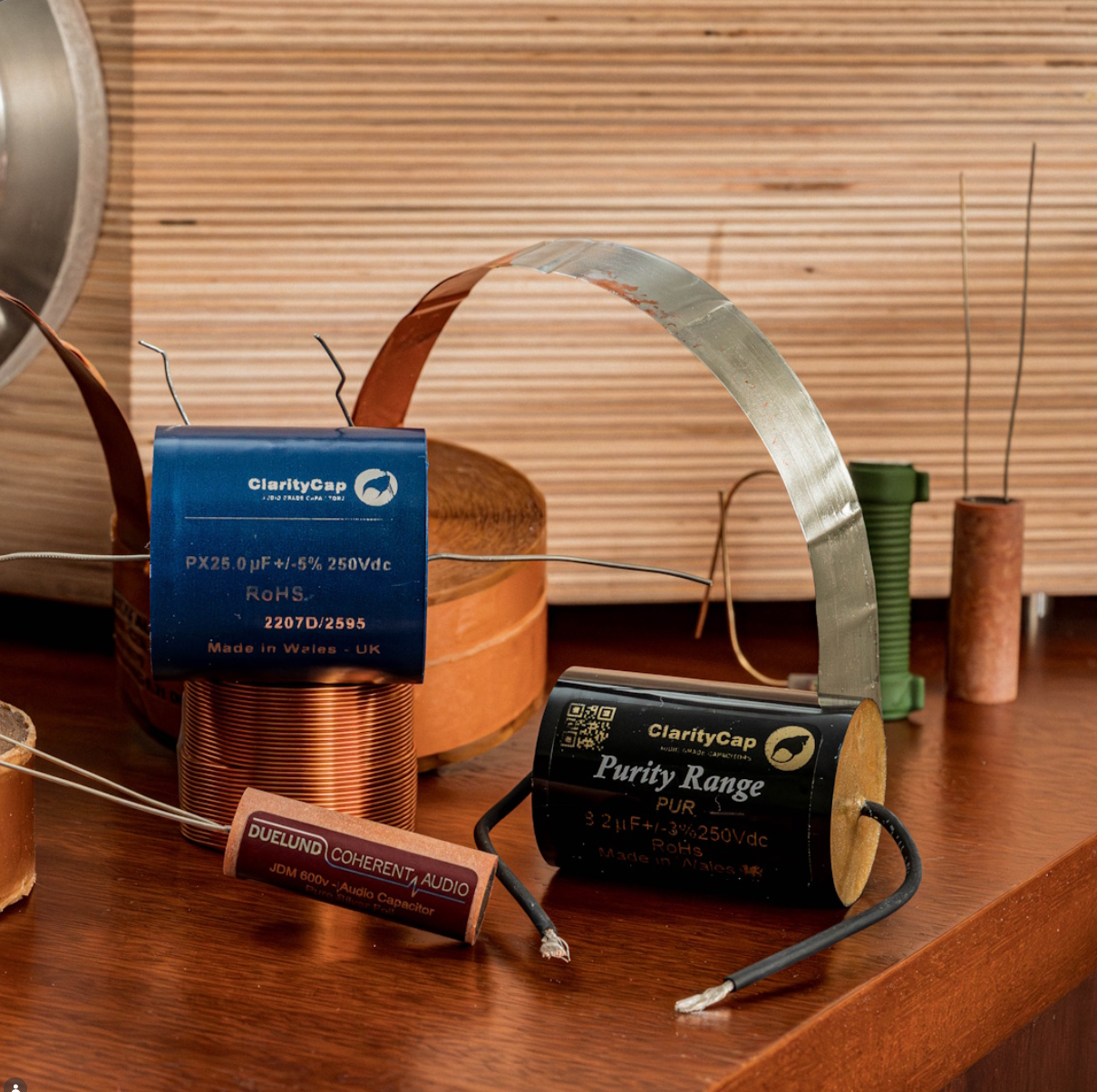
When you think about speaker sound quality, the first things that probably come to mind are the woofer, tweeter or amplifier. That makes sense, as these are the components you can see or hear about most often. However, smaller components also play an essential role behind the scenes. Capacitors, inductors and resistors may be hidden inside your speaker, but they help determine which frequencies reach each driver and how the system performs. If you're building your own speakers or upgrading an existing design, understanding these components can help you make better decisions. Let's explore five essential parts of a speaker system, including premium crossover components from Danish manufacturer Duelund Coherent Audio.
1. Audio capacitors: controlling which frequencies pass through
What does a capacitor do in a speaker crossover? A capacitor temporarily stores electrical energy and provides frequency-dependent impedance. In a simple high-pass filter, a capacitor connected in series with a tweeter reduces lower frequencies while allowing higher frequencies to pass more easily. This is important because tweeters are designed to reproduce high frequencies and can become distorted or damaged when exposed to excessive low-frequency energy. The capacitance of an audio capacitor is measured in farads, although speaker crossover capacitors are typically specified in microfarads (µF).
Why does it matter? The capacitance value influences the frequencies reaching the tweeter. Together with the driver's impedance and other crossover components, it determines the electrical behaviour of the filter. Replacing a speaker capacitor with a different value can therefore change the crossover response, even if the replacement is more expensive.
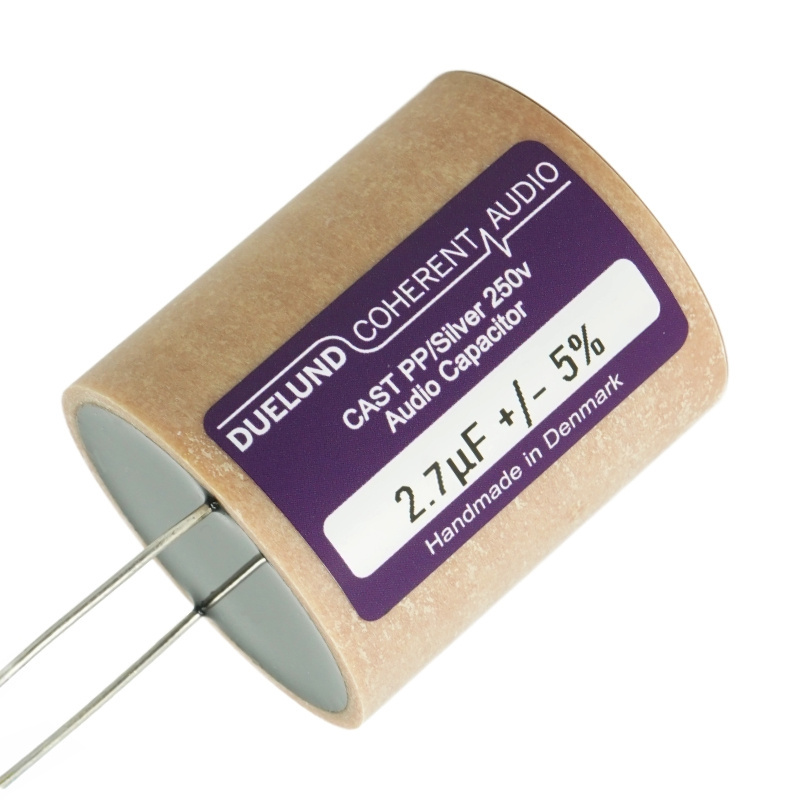
Duelund audio capacitors for premium speaker crossovers
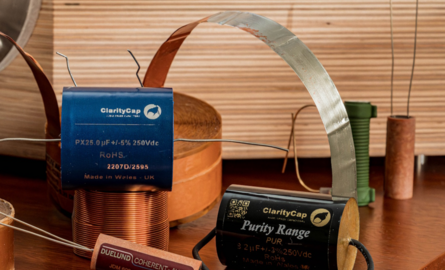
For demanding DIY audio projects, Duelund Coherent Audio offers specialised audio capacitors manufactured with a strong focus on materials and construction. The Danish brand is positioned in the premium segment of crossover components, with several capacitor series available for different applications.
Duelund CAST PIO series: These capacitors use a paper-in-oil construction, combining paper and oil as part of the dielectric system. They are designed for demanding audio applications, including passive speaker crossovers.
Duelund CAST PP series: This series uses polypropylene as its dielectric material. It combines the CAST construction with the electrical characteristics of polypropylene for applications where stable component properties are important.
Duelund JDM Copper series: The JDM Copper series incorporates copper foil and is designed for high-quality audio circuits. It offers another construction option for enthusiasts selecting components for their audio systems.
Choosing the right crossover capacitor depends on the filter design, required capacitance, tolerance and other electrical specifications. A premium capacitor does not automatically improve sound quality if its specifications do not match the circuit.
2. Crossover inductors: the counterpart to capacitors
While a capacitor in a simple series circuit allows higher frequencies to pass more easily, an inductor behaves differently. An inductor, often called a crossover coil, provides increasing opposition to alternating current as frequency rises. In a basic low-pass filter, an inductor is commonly connected in series with a woofer to attenuate higher frequencies. This helps direct the appropriate frequency range to the driver. Inductance is measured in henries (H), although speaker crossover inductors are usually specified in millihenries (mH).
Why does it matter? The inductance value helps determine the filter's frequency response, while the inductor's DC resistance can influence driver output and electrical damping. Wire thickness, conductor material and construction are therefore important characteristics when selecting an inductor.
Duelund CAST PIO copper foil inductors
Alongside audio capacitors, Duelund Coherent Audio manufactures premium inductors for passive speaker crossovers. The Duelund CAST PIO 12 CU series consists of copper foil inductors using a 12 AWG conductor. Instead of conventional round wire, these inductors use copper foil and are available in different inductance values to accommodate various crossover designs. When selecting an inductor for a DIY speaker project, consider its inductance, DC resistance, tolerance and physical dimensions. The most suitable component is the one that meets the technical requirements of the complete crossover circuit.
3. Resistors: small components that influence speaker balance
Not every driver in a loudspeaker has the same sensitivity. A tweeter may produce a higher sound pressure level than a woofer when both receive the same input voltage. Resistors are frequently used in passive speaker crossovers to reduce the signal level reaching a driver and create a better balance between the different frequency ranges. One common arrangement is an L-pad, which combines resistors to attenuate a driver while helping maintain a more consistent impedance.
Why does it matter? A resistor is specified by its resistance in ohms (Ω) and its power rating. In a speaker crossover, it must be capable of handling the expected electrical load and heat dissipation. Changing the resistance value can affect the level of a driver and the overall crossover response, so both the correct resistance and an appropriate power rating are essential.
4. Audio connectors: reliable connections start with the details
A loudspeaker consists of more than drivers and crossover components. Reliable electrical connections are also important, including speaker terminals, internal wiring and connectors. Poor contacts can cause interruptions, crackling or unwanted additional resistance. The quality of a connection depends on factors such as mechanical fit, contact pressure and proper installation. Passive speakers commonly use binding posts, banana plugs or spade connectors, while RCA connectors are frequently used for signal connections between audio sources and amplifiers.
Duelund RCA connectors for audio signal connections
Duelund Coherent Audio also offers specialised RCA connectors, including designs that use paper-based insulating materials. These connectors reflect the brand's emphasis on material selection and are intended for signal connections between audio components. RCA plugs should not be confused with speaker terminals or banana plugs, as they are generally used for low-level audio signals rather than the amplified output supplied to passive loudspeakers.
5. The speaker crossover: where everything works together
The fifth element is not a single component but a combination of several: the speaker crossover. In a multi-driver loudspeaker, a crossover distributes the appropriate frequency ranges between the drivers. A tweeter primarily reproduces high frequencies, while a woofer handles lower frequencies. A three-way speaker may also include a midrange driver. Capacitors, inductors and resistors work together in different circuit arrangements to achieve this frequency distribution.
Why does it matter? A well-designed speaker crossover considers much more than the crossover frequency alone. Driver impedance, frequency response, sensitivity and acoustic characteristics all influence the result. Simply combining a capacitor and an inductor does not guarantee a balanced system. Component quality matters, but proper crossover design, measurement and integration are equally important.
Which speaker components have the greatest impact?
Each component serves a different purpose, and its importance depends on the speaker design and application.
| Component | Main function | What to consider |
|---|---|---|
| Capacitor | Frequency-dependent filtering, often for tweeters | Capacitance, tolerance and voltage rating |
| Inductor | Frequency-dependent filtering, often for woofers | Inductance, DC resistance and conductor size |
| Resistor | Adjusting driver signal levels | Resistance and power rating |
| Connector | Providing a reliable electrical connection | Fit, contact quality and installation |
| Speaker crossover | Distributing frequencies between drivers | Filter design and driver integration |
Upgrading your speakers? Start with the design
It can be tempting to replace every capacitor or inductor in an existing speaker with a more expensive alternative. However, this does not necessarily deliver better results. Speaker performance depends on how the drivers, enclosure and crossover work together. If the system is not properly designed or matched, replacing a single component may not produce the improvement you expect. Before upgrading a crossover, understand the original design and the role of each component.
At SoundImports, you'll find a wide selection of crossover components, including premium capacitors, inductors and RCA connectors from Duelund Coherent Audio. With handcrafted components from Denmark, Duelund caters to demanding DIY audio enthusiasts who value careful component selection and attention to detail. This allows you to choose parts that meet the technical requirements and ambitions of your speaker project.