 New products
  Home audio
  Audio components
  Crossover components
  Test & measurement
  DIY kits
  Accessories
  SALE
SALE  New products
 Speakers
 Amplifiers
 DAC converters
 DSP modules
 Turntables
 Streamers
 Woofers
 Tweeters
 Exciters
 Bass shakers
 Plate amplifiers
 Amplifier modules
 Single board computers
 Assembled crossovers
 Printed Circuit Boards (PCB)
 Capacitors
 Resistors
 Coils
Coils Circuit Breakers
 Crossover tools
 Screw terminals
 Acoustic measurements
 Electric measurements
 Sound level meters
 DIY amplifier kits
 DIY component packs
 DIY speaker kit
 DIY subwoofer kits
 DIY bluetooth speaker
 DIY electronics kits
 Binding posts
 Cabinet Hardware
 Cables
 Connectors
 Speaker cabinets
 Electromechanics
 Power supplies
 Speaker repair
 Workshop & tools
 Amplifier accessories
 Stands & mounts
 Gift voucher
 Books
Books SALE
SALE







 New products
 Speakers
 Amplifiers
 DAC converters
 DSP modules
 Turntables
 Streamers
 Woofers
 Tweeters
 Exciters
 Bass shakers
 Plate amplifiers
 Amplifier modules
 Single board computers
 Assembled crossovers
 Printed Circuit Boards (PCB)
 Capacitors
 Resistors
 Coils
Coils Circuit Breakers
 Crossover tools
 Screw terminals
 Acoustic measurements
 Electric measurements
 Sound level meters
 DIY amplifier kits
 DIY component packs
 DIY speaker kit
 DIY subwoofer kits
 DIY bluetooth speaker
 DIY electronics kits
 Binding posts
 Cabinet Hardware
 Cables
 Connectors
 Speaker cabinets
 Electromechanics
 Power supplies
 Speaker repair
 Workshop & tools
 Amplifier accessories
 Stands & mounts
 Gift voucher
 Books
Books SALE
SALE


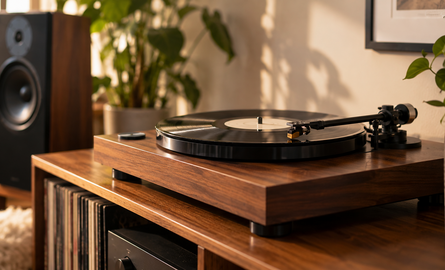
How to choose the best record player: 5 things to consider
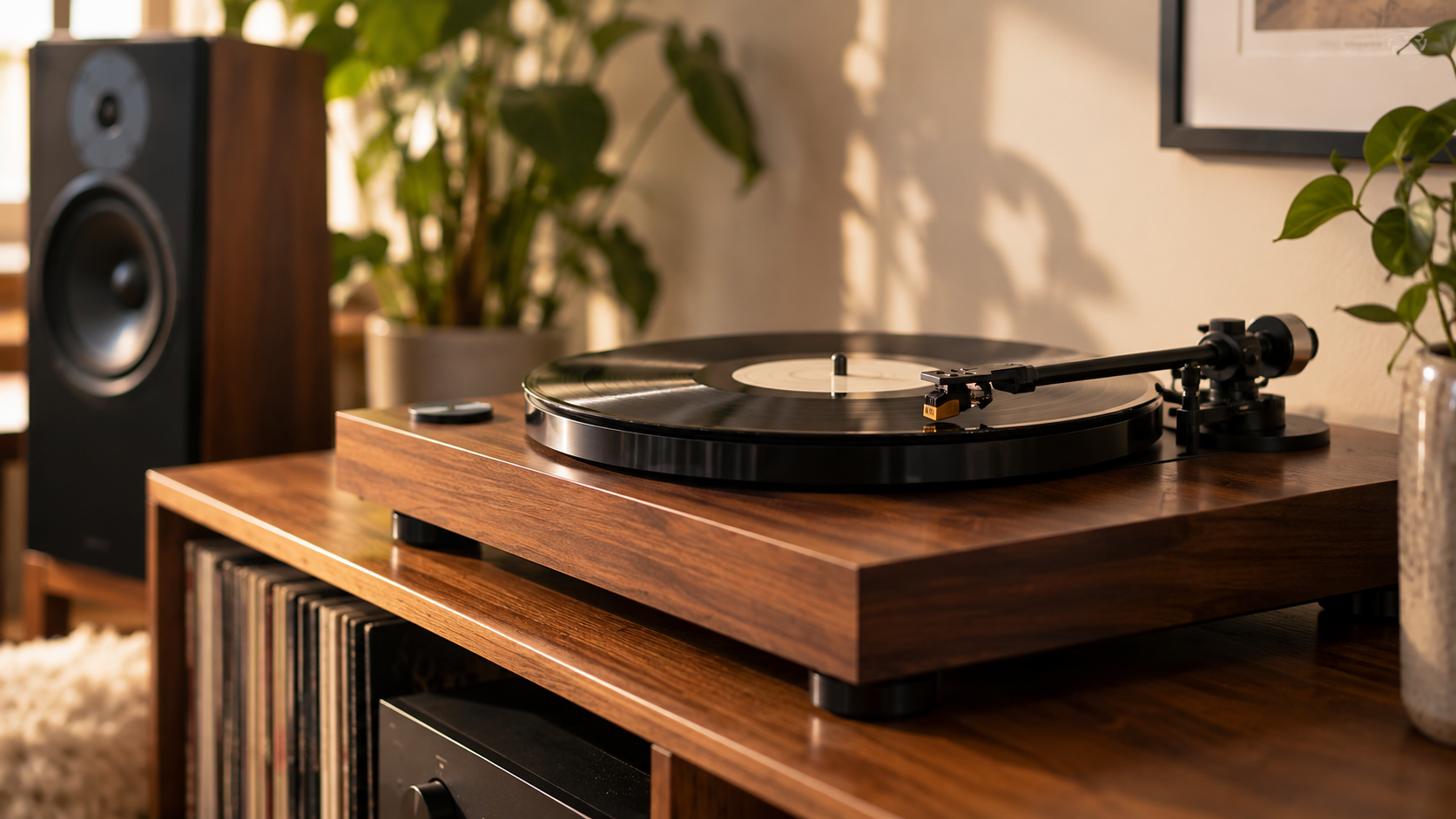
Vinyl is back, and so is the interest in finding the best record player for your home audio setup. But with so many options available, choosing the right one isn't always straightforward.
From affordable record players for beginners to high-end turntables with upgradeable components, there is plenty to consider. And that's before you start comparing belt drive vs direct drive, phono preamps, cartridges and speakers.
So, what is the best record player? The answer depends on how you plan to use it and which audio equipment you already own. A more expensive turntable isn't necessarily the best choice for your listening setup. These five considerations will help you make a more informed decision.
1. Decide what you want from your record player
Before comparing different models and specifications, think about what you're actually looking for. Do you simply want to enjoy your vinyl collection without a complicated setup? In that case, ease of use and a built-in phono preamp might be more important than extensive upgrade options. If you're interested in getting more out of your audio system over time, consider a turntable with a replaceable cartridge and stylus. The option to use an external phono preamp later can also be useful.
Your budget matters, too. Finding the best budget record player isn't necessarily about choosing the cheapest model. It's about getting the features you need without paying for extras you won't use.
Similarly, a good record player should offer a balance between build quality, performance and flexibility. The best value often comes from choosing a model that suits your current needs while leaving room for future improvements.
2. Belt drive vs direct drive: What's the difference?
One of the first decisions you'll encounter when choosing a turntable is whether to go for belt drive or direct drive. The difference lies in how the motor rotates the platter.
Belt drive turntables
In a belt drive turntable, the motor drives the platter through a belt. This arrangement reduces the direct mechanical connection between the motor and platter, helping to isolate motor vibrations.
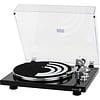
Belt drive models are a common choice for home listening and are available across a wide range of prices. If you're considering a belt drive turntable for home listening, Dayton Audio offers models designed for vinyl enthusiasts. SoundImports carries the Dayton Audio TT-1BTW and TT-1BTB belt driven turntables, making them worth exploring when comparing your options.
Direct drive turntables
In a direct drive turntable, the motor drives the platter directly. These turntables generally reach their operating speed quickly and can provide excellent speed stability. They're particularly popular among DJs, who benefit from their quick response and control.
But is a direct drive turntable better than a belt drive model? Not necessarily. Both designs can deliver excellent results. For home listening, it's more useful to evaluate the complete turntable, including its construction, motor performance, tonearm and cartridge, rather than choosing based on the drive system alone.
3. Check whether you need a phono preamp
Imagine connecting your new record player, putting on your favourite album and barely hearing anything through your speakers. One possible reason is that your audio system is missing a phono preamp.
A turntable cartridge produces a much weaker signal than typical line-level sources such as CD players or music streamers. A phono preamp amplifies this signal to an appropriate level and applies the necessary RIAA equalisation.
Record player with a built-in preamp
Some record players include a built-in phono preamp, making them easier to connect to amplifiers or active speakers with a standard line-level input. This can be a convenient option for beginners who want a straightforward setup.
Turntable with an external preamp
If your turntable doesn't have a built-in phono preamp, check whether your amplifier has a dedicated phono input.
If it doesn't, you'll need a separate phono preamp. An external preamp can also offer more flexibility if you plan to upgrade your audio system later. Before buying a turntable, always check which connections are available. It can save you from discovering that you're missing an essential component when you're ready to play your first record.
4. Consider your amplifier and speakers
Finding the best record player is only part of building a good vinyl listening setup. Ultimately, what you hear depends on the entire audio signal chain:
Turntable → Phono preamp → Amplifier → Speakers
Each component plays a role in the final listening experience.
Choosing an amplifier for your turntable
If you already own an amplifier and passive speakers, check which inputs are available and whether the amplifier includes a phono stage.
The best amplifier for a turntable isn't necessarily the most powerful model. What's more important is that it works with your speakers, offers the connections you need and suits your listening preferences. If you're starting from scratch, make sure to allocate part of your budget to the amplifier and speakers rather than spending almost everything on the turntable.
What are the best speakers for a record player?
There are no speakers designed exclusively for listening to vinyl. The best speakers for your record player depend on your room, amplifier, preferred listening volume and personal taste. You can choose between active speakers, which have built-in amplification, and passive speakers, which require an external amplifier.
When comparing options, consider the entire system rather than individual components in isolation. A well-balanced audio setup will often be a more sensible investment than pairing an expensive turntable with speakers that don't meet your needs.
5. Think about future upgrades
A record player can be something you buy once and enjoy for many years without changing anything. But it can also become the starting point for a home audio system that evolves over time. If you enjoy experimenting with audio equipment, it's worth checking whether your chosen turntable allows you to upgrade individual components.
Possible upgrades include:
- Replacing the stylus
- Installing a different cartridge
- Adding an external phono preamp
- Upgrading your speakers
- Choosing a different amplifier
- Improving turntable placement and vibration isolation
You don't need to make these upgrades immediately. The advantage of choosing an upgradeable turntable is that you can improve or adapt your setup over time without replacing the entire record player. This is one reason why a slightly more expensive but flexible model may offer better long-term value than the cheapest available option.
What is the best record player for you?
There isn't one record player that's the best choice for everyone. Use this comparison to help identify what matters most for your setup.
| You're looking for | What to prioritise |
|---|---|
| Your first record player | Ease of use and a built-in phono preamp |
| The best budget record player | Solid construction and essential features |
| The best value for money | Build quality, cartridge and upgrade options |
| A simple audio setup | Built-in phono preamp and compatible connections |
| A system you can upgrade | Replaceable cartridge and flexible connectivity |
| A better listening experience | The combination of turntable, amplifier, speakers and placement |
Instead of relying entirely on lists of the best record players, start with your own situation. What equipment do you already have? How much are you willing to spend? And would you like to upgrade your audio system in the future? Once you know the answers, choosing the right record player becomes much easier.
Build and improve your vinyl audio setup
Your turntable is only one part of the listening experience.Your amplifier, speakers, cables and the way everything is connected all contribute to how your system performs. Whether you're building your first vinyl setup or upgrading an existing one, choosing compatible components is essential.
At SoundImports, you'll find audio components and accessories to help you build, connect and improve your sound system.