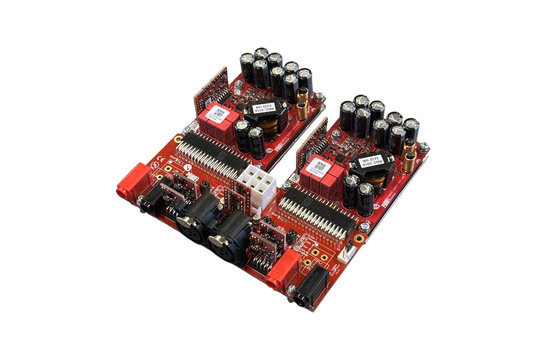
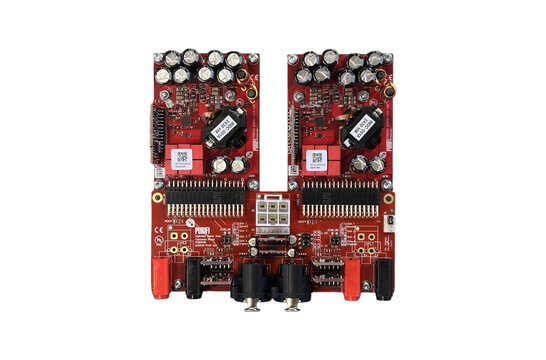
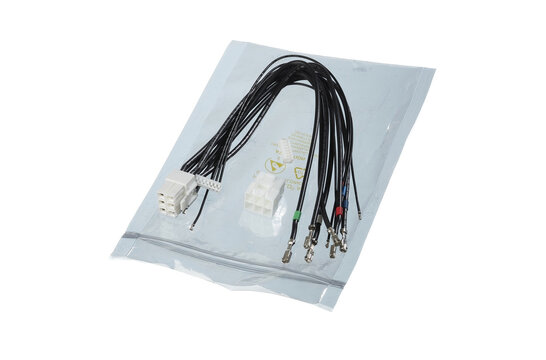
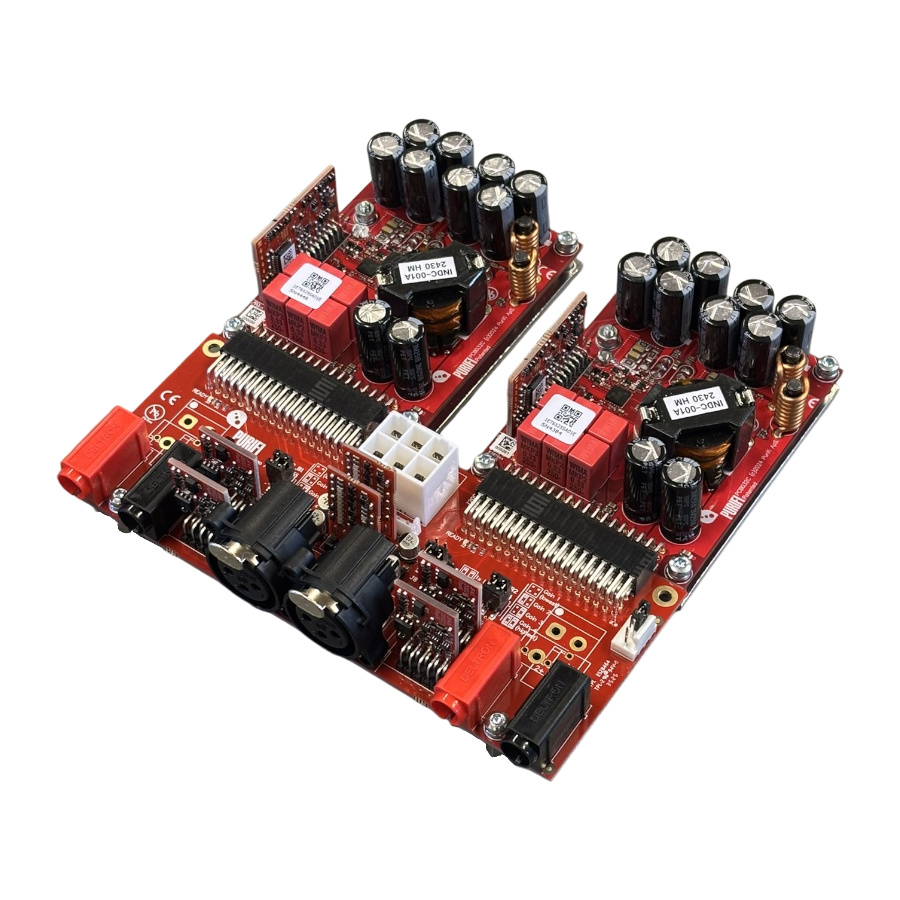
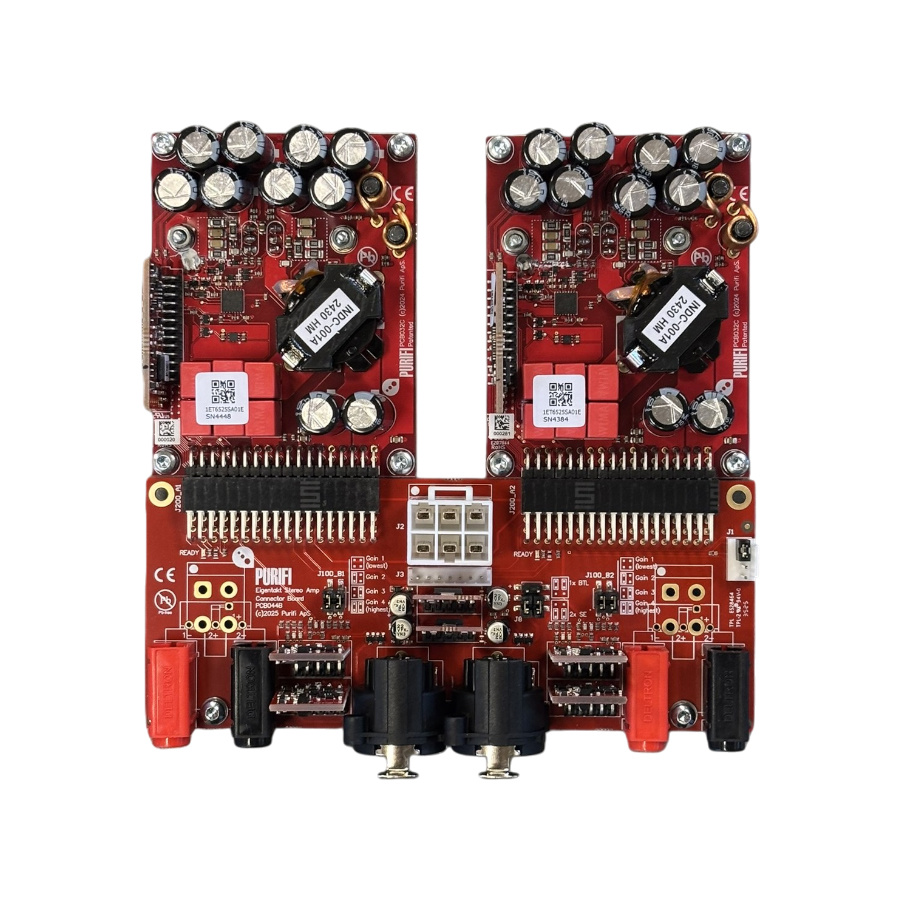
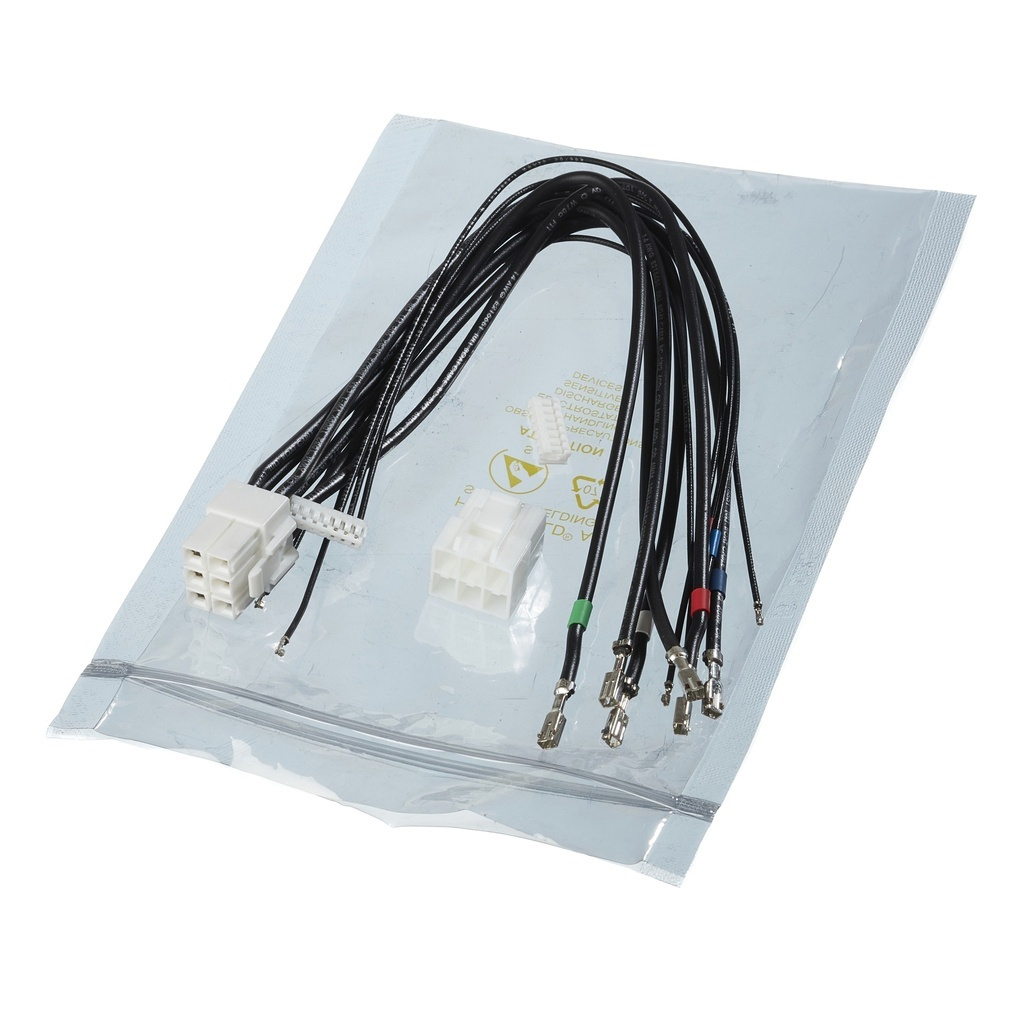
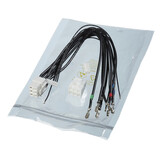
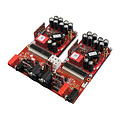
The PURIFI EVAL9 Deluxe Stereo Eval Kit is a two-channel evaluation platform built around two 1ET6525SA amplifier modules, a stereo FE08 front-end board and a cable set for straightforward testing and DIY integration.
Highlights of the PURIFI EVAL9
- Deluxe stereo evaluation kit with two 1ET6525SA amplifier modules
- FE08 front-end board with balanced XLR analog inputs
- Banana-plug speaker outputs plus solder pads for additional speaker connectors
- 450 W output power at 1% THD into 4 ohms
- Ultra-low-noise pre-gain stage with four selectable gain settings
- Status LEDs and pin headers for access to I2C and status information
Product details PURIFI EVAL9
PURIFI EVAL9 Deluxe Stereo 1ET6525SA Evaluation Kit
The PURIFI EVAL9 is designed for easy evaluation of the 1ET6525SA platform in stereo configurations. It combines two amplifier modules with the FE08 stereo front-end board, giving you the essential connectivity and control features needed to operate the modules in a practical test or DIY build environment.
For signal and speaker connection, the EVAL9 provides balanced analog XLR inputs, banana-plug speaker outputs and solder pads for adding extra speaker connectors such as SpeakON. This makes the kit convenient for prototyping, bench testing and integration work around high-performance amplifiers.
The FE08 front-end includes an ultra-low-noise, low-THD pre-gain stage with four gain settings using PURIFI’s FET-input discrete op-amp design. Ultra-low-noise linear voltage regulators supply the op-amps, while status LEDs and multiple pin headers provide access to functions such as I2C and status information. A pin header is also included for connecting the 1ET6525SA module in BTL mode.
The kit supports a supply voltage of ±25 V to ±65 V for VP, 15 V for VDR and ±18 V unregulated. Physical dimensions are 146 mm x 142 mm x 36 mm, with a weight of 373 g. Although the 1ET6525SA has very low idle losses and high overall efficiency, proper heatsinking and careful thermal design remain essential for sustained high-power operation, and the system power supply is often the limiting factor in real-world applications.
Show more
Show less


 New products
  Home audio
  Audio components
  Crossover components
  Test & measurement
  DIY kits
  Accessories
  SALE
SALE  New products
 Speakers
 Amplifiers
 DAC converters
 DSP modules
 Turntables
 Streamers
 Woofers
 Tweeters
 Exciters
 Bass shakers
 Plate amplifiers
 Amplifier modules
 Single board computers
 Assembled crossovers
 Printed Circuit Boards (PCB)
 Capacitors
 Resistors
 Coils
Coils Circuit Breakers
 Crossover tools
 Screw terminals
 Acoustic measurements
 Electric measurements
 Sound level meters
 DIY amplifier kits
 DIY component packs
 DIY speaker kit
 DIY subwoofer kits
 DIY bluetooth speaker
 DIY electronics kits
 Binding posts
 Cabinet Hardware
 Cables
 Connectors
 Speaker cabinets
 Electromechanics
 Power supplies
 Speaker repair
 Workshop & tools
 Amplifier accessories
 Stands & mounts
 Gift voucher
 Books
Books SALE
SALE









 New products
 Speakers
 Amplifiers
 DAC converters
 DSP modules
 Turntables
 Streamers
 Woofers
 Tweeters
 Exciters
 Bass shakers
 Plate amplifiers
 Amplifier modules
 Single board computers
 Assembled crossovers
 Printed Circuit Boards (PCB)
 Capacitors
 Resistors
 Coils
Coils Circuit Breakers
 Crossover tools
 Screw terminals
 Acoustic measurements
 Electric measurements
 Sound level meters
 DIY amplifier kits
 DIY component packs
 DIY speaker kit
 DIY subwoofer kits
 DIY bluetooth speaker
 DIY electronics kits
 Binding posts
 Cabinet Hardware
 Cables
 Connectors
 Speaker cabinets
 Electromechanics
 Power supplies
 Speaker repair
 Workshop & tools
 Amplifier accessories
 Stands & mounts
 Gift voucher
 Books
Books SALE
SALE